When Do Babies Start Crawling?
|
Getting your Trinity Audio player ready...
|
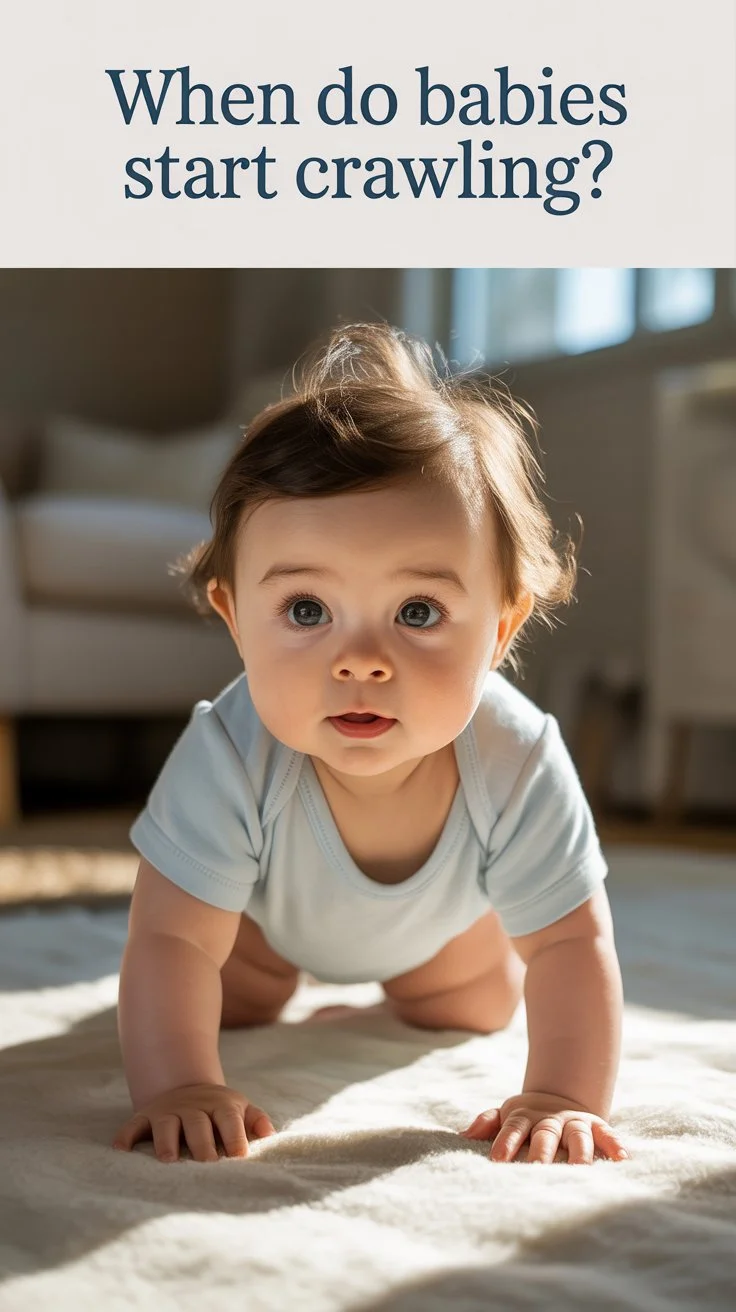
Crawling is one of the most exciting milestones for babies. It gives them independent movement and opens up new ways to explore their surroundings. Most babies begin crawling between 7 and 10 months, though some may start earlier at 6 months or later than 10 months. Some babies even skip crawling entirely.
Note: For premature babies, use adjusted age to track developmental milestones.
The CDC no longer lists crawling as a milestone, but understanding crawling development is still important for parents.
Crawling and Sleep
When babies start crawling, they may have sleep challenges. They may want to practice crawling instead of sleeping, especially around 8–9 months, which could lead to a short sleep regression.
Crawling Stages
Not every baby will follow the same stages, and some may skip stages or do multiple simultaneously. Common stages include:
- Tummy Time – Strengthens neck, arms, and back muscles. Start with 3–5 minutes and gradually increase.
- Pivoting – Moving in circles while on the belly.
- Planking – Raising the body onto hands and toes or hands and knees.
- Moving Forward on Belly – Scooting or jumping forward on the belly.
- Rocking on Hands and Knees – Learning balance before moving forward.
- Transition from Belly to Sitting – Some babies sit up before crawling.
- Pushing Backward – Initial backward movement before moving forward.
6 Tips to Encourage Crawling
- Place Toys Slightly Out of Reach – Encourage your baby to push up and reach for toys.
- Offer Support – Support the chest during tummy time using your hand or your leg.
- Do Push-Ups Together – Babies may imitate your movements.
- Rock to Music – Rock forward and backward with your baby to teach balance.
- Crawl to a Favorite Toy – Lead by example and show your baby crawling to reach a toy.
- Dress for Traction – Avoid slippery clothes or socks; bare knees and toes help grip the floor.
Different Crawling Styles
Babies may explore different crawling styles:
- Classic Crawl: Opposite hands and knees move forward alternately.
- Belly Crawl (Army Crawl): Pulling forward on the stomach.
- Bear Crawl: Hands and feet stretched, moving like a bear.
- Rolling Crawl: Rolling the body to move.
- Bottom Scoot Crawl: Sitting upright, pushing with arms and legs.
- Crab Crawl: One knee, one foot, and both hands propel the baby.
Keeping Your Baby Safe While Crawling
- Babyproof your home; crawl on all fours to see hazards from their perspective.
- Supervise your baby constantly; floors are safer than beds or couches.
- Use a crawling mat to protect knees and head.
When to Call a Doctor
Not all babies crawl, and skipping crawling is not usually harmful. Crawling helps build muscles and balance, but babies who are carried or skip crawling often develop normally.
Contact your doctor if your baby:
- Doesn’t try to move
- Doesn’t use both sides of the body
Early intervention programs in the U.S. are free and can evaluate your baby at home without a doctor’s referral.
Takeaway
- Crawling usually happens between 7–10 months.
- Some babies skip crawling entirely.
- Multiple crawling styles and stages exist.
- Safe practices and fun exercises encourage crawling.
- Skipping crawling does not cause developmental issues.
Crawling FAQ
Q1: Is delayed crawling normal?
Yes. Babies develop at their own pace, and some may not crawl before walking.
Q2: When do babies start crawling?
Typically between 7 and 10 months.
Q3: Why is my baby not crawling yet?
Every baby develops differently. Some may skip crawling entirely.
Q4: Do some babies skip crawling?
Yes, especially in cultures where babies are carried frequently.
Q5: What are signs of crawling readiness?
Tummy time, rocking on hands and knees, pushing up, or moving toward toys.