Backhanded Compliments: Meaning, Examples, and Smart Ways to Respond
|
Getting your Trinity Audio player ready...
|
Sometimes people say something that sounds like praise, but deep inside, it feels uncomfortable or hurtful. You may smile on the outside, but your confidence drops a little. This is called a backhanded compliment.
Backhanded compliments are very common in daily life. You can hear them from friends, relatives, colleagues, classmates, or even strangers. If you do not understand them properly, they can slowly affect your self-esteem and relationships.
In this article, we will explain everything about backhanded compliments in simple English, with clear examples and easy solutions.
What Is a Backhanded Compliment?
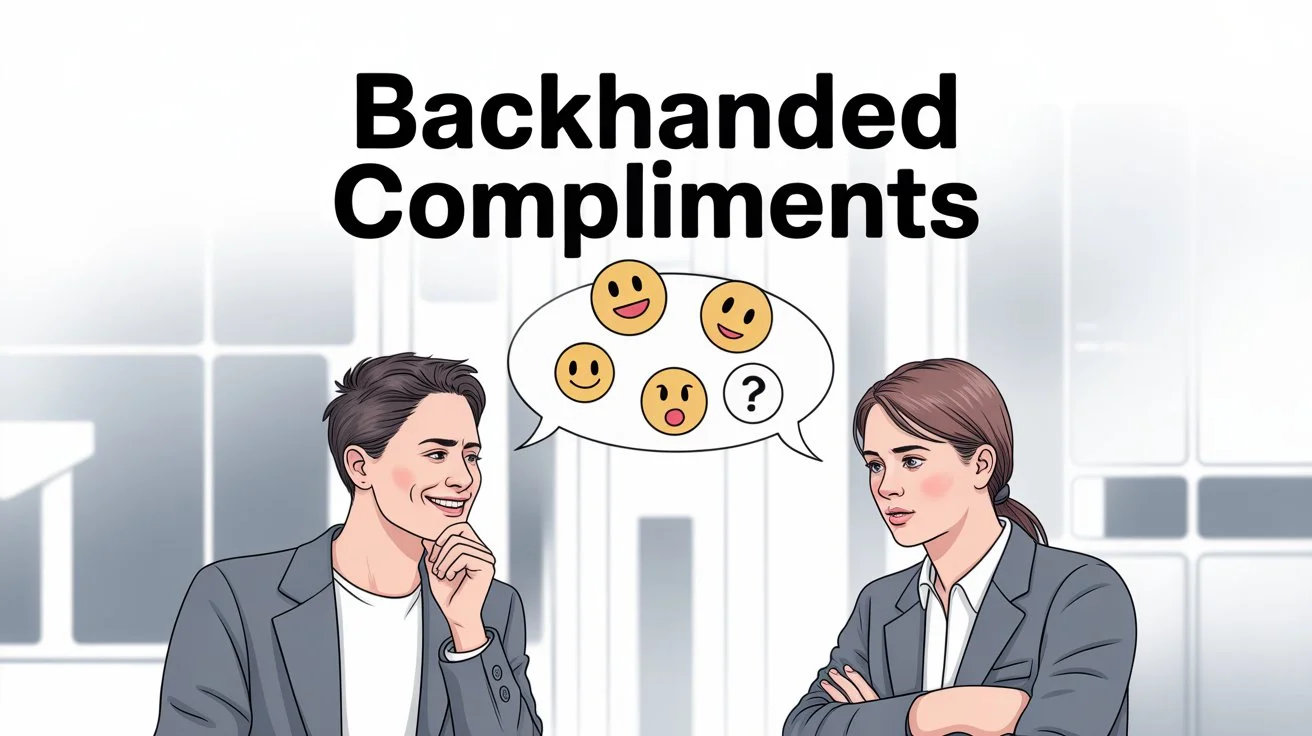
A backhanded compliment is a statement that looks like praise but actually contains a hidden insult.
It has two layers:
- One positive line
- One negative or judgmental meaning
Simple Definition
A backhanded compliment is criticism covered with fake praise.
Example
“You speak English very well for someone from a small town.”
This sounds like praise, but it also suggests that people from small towns are not expected to speak English well.
Why Backhanded Compliments Are Harmful
Backhanded compliments can:
- Lower self-confidence
- Create self-doubt
- Damage trust in relationships
- Create emotional stress
- Make you feel confused or insulted
The worst part is that they are not direct insults, so it becomes difficult to respond.
Common Examples of Backhanded Compliments
Here are some easy-to-understand examples you may hear in real life:
- “You look good today… finally.”
- “That was a good presentation for a beginner.”
- “You are smarter than you look.”
- “I didn’t expect you to do this job so well.”
- “You look nice without makeup.”
- “You handled it well for your age.”
- “You are very confident for a woman.”
- “Your house is so… lived in.”
- “You are not as boring as I thought.”
- “This dress suits you better than your usual clothes.”
All these lines carry hidden judgement.
Why Do People Give Backhanded Compliments?
Not everyone who gives a backhanded compliment wants to hurt you. The reasons can be different.
1. Jealousy
When someone feels insecure or jealous, they may try to pull others down instead of improving themselves.
2. Feeling Superior
Some people want to show that they are better, smarter, or more experienced.
3. Poor Communication Skills
Many people do not know how to express appreciation properly.
4. Passive Aggression
Instead of saying negative feelings openly, they hide them inside “compliments.”
5. Social Conditioning
Some people grow up hearing such language and think it is normal.
How to Identify a Backhanded Compliment
Ask yourself these questions:
- Did it make me feel confused?
- Did it reduce my confidence?
- Was there a comparison?
- Was there a “for someone like you” phrase?
- Did it focus on stereotypes?
If the answer is yes, it is likely a backhanded compliment.
How to Respond to a Backhanded Compliment
You do not need to fight or argue every time. Smart responses protect your dignity and peace.
1. Assume Good Intent (First Time Only)
Sometimes people speak without thinking.
Example response:
“Thank you.”
This keeps the situation calm and avoids unnecessary conflict.
2. Accept Only the Positive Part
Ignore the hidden insult and take control of the situation.
Example:
“Thanks, I worked hard on it.”
This shows confidence and maturity.
3. Ask for Clarification
This makes the speaker realize their mistake.
Example:
“What do you mean by that?”
Most people will feel uncomfortable and correct themselves.
4. Use Humor
Light humor can expose the insult without drama.
Example:
“Should I be worried about that comment?” 😄
5. Set a Boundary (If Repeated)
If someone keeps doing this, you must be clear.
Example:
“That comment felt disrespectful. Please don’t speak like that.”
This is strong and respectful.
How to Confront Backhanded Compliments Properly
Confrontation should be calm, not emotional.
Steps to Follow
- Choose the right time
- Speak privately
- Use “I feel” statements
- Explain clearly
- Ask for change
Example:
“I feel uncomfortable when you make comments like this. I would appreciate more respectful communication.”
Backhanded Compliments at Work
At the workplace, backhanded compliments can be very damaging.
Common Workplace Examples
- “You did well for a junior.”
- “I didn’t expect this level of work from you.”
- “You are surprisingly confident.”
What to Do at Work
- Stay professional
- Document repeated behavior
- Respond calmly
- Talk to HR if needed
Backhanded Compliments in Family and Friends
Family members often say things like:
- “You have lost weight, you looked unhealthy before.”
- “You finally settled down.”
- “This job is good enough for you.”
In such cases:
- Speak honestly
- Protect your emotional health
- Create boundaries if required
Comparison Table: Compliment vs Backhanded Compliment
| Normal Compliment | Backhanded Compliment |
| You did great work | You did great work for a beginner |
| You look nice | You look nice today |
| You are confident | You are confident for a woman |
| You speak well | You speak well for your background |
Benefits of Handling Backhanded Compliments Well
- Builds self-confidence
- Improves communication skills
- Protects mental peace
- Shows emotional intelligence
- Strengthens boundaries
Common Problems and Solutions
Problem: Feeling shocked
Solution: Pause, breathe, respond calmly
Problem: Not knowing what to say
Solution: Prepare simple responses in advance
Problem: Emotional reaction
Solution: Focus on facts, not feelings
Practical Tips to Handle Backhanded Compliments
- Stay confident
- Do not over-explain
- Keep responses short
- Practice assertive communication
- Value your self-respect
FAQs About Backhanded Compliments
1. Are backhanded compliments always intentional?
No. Some people are unaware of their words.
2. Should I always respond?
Not always. Silence can also be powerful.
3. Are backhanded compliments toxic?
Repeated ones can be toxic.
4. Can ignoring them reduce their impact?
Yes, especially if it happens rarely.
5. Is it okay to confront family members?
Yes, respectfully and calmly.
Conclusion
Backhanded compliments may look harmless, but they can slowly damage confidence and relationships. Learning to recognize and respond to them is an important life skill.
When you understand backhanded compliments, you gain control, confidence, and clarity. Remember, you deserve respect — not hidden insults.